WHO WE ARE


Contramestre Boneco
Boneco has been teaching Capoeira since the 1990s. He is a percussionist, qualified fitness instructor, and Associate Lecturer in Stage and Film Combat (BADC) at the University of Chichester.
His vision in Capoeira Angola is to study its origins and ancestry while honouring traditional teaching methods, including music and movement etiquette, in an inclusive and reflective learning environment.
He aims to create a space where everyone can learn Capoeira Angola with confidence.
Rooted in the fusion of African and Indigenous cultures in Brazil, Boneco's work in Capoeira Angola promotes well-being, bringing communities together and a positive approach to practice.

In Brighton since 2002
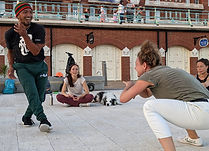
Mucambo Capoeira Angola was founded in 2002 by Boneco de Sousa. He and his three sisters—known in the capoeira community as the Amazonas family—have taught Capoeira in the UK for many years.
Boneco's school is recognised in the UK, Europe and Brazil for its dedication and welcoming atmosphere. They often collaborate with other groups and host guest teachers from Brazil, the UK and Europe.
Based in Brighton, we offer regular Capoeira Angola classes for all ages and backgrounds. We believe Capoeira inspires positive change, promotes Afro-Brazilian culture, and fosters empowerment, social awareness and mutual respect.